
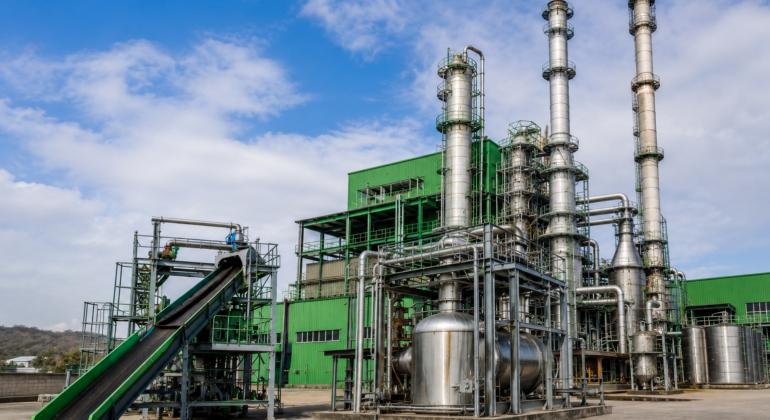
Having successfully engineered multiple waste-to-fuel and advanced biofuel production facilities, the team has witnessed firsthand how innovative technologies are transforming agricultural residues and organic waste into valuable low-carbon fuels. These projects represent a significant step toward sustainable industrial development by converting underutilized biomass resources into products such as Sustainable Aviation Fuel (SAF), Renewable Fuels, and other advanced biofuels.
The growing demand for cleaner energy solutions, combined with increasing pressure to reduce carbon emissions, has accelerated investment in waste-to-fuel technologies across the world. Unlike conventional fossil fuel production, these facilities create value from waste streams that would otherwise contribute to environmental pollution through open burning, decomposition, or landfill disposal.
Modern waste-to-fuel plants demonstrate how waste can be transformed into a strategic resource. By integrating advanced conversion technologies with efficient industrial processes, these facilities support circular economy principles, reduce greenhouse gas emissions, and contribute to long-term energy security.
Rather than viewing agricultural and organic waste as a disposal challenge, industries are increasingly recognizing its potential as a renewable feedstock capable of producing sustainable fuels for transportation, aviation, industrial heating, and future energy applications.
The Challenge of Waste Management
Across the globe, millions of tonnes of agricultural and organic waste are generated annually. Crop residues, biomass waste, agro-industrial by-products, and other organic materials are often left unused or disposed of through environmentally harmful methods.
Open burning of agricultural residues contributes significantly to air pollution, particulate emissions, and greenhouse gas generation. Similarly, organic waste sent to landfills releases methane, a greenhouse gas with a much higher warming potential than carbon dioxide.
Traditional disposal methods not only impact the environment but also represent a lost opportunity to recover valuable energy embedded within these waste streams.
From Waste to Energy: A New Perspective
Waste-to-fuel technologies offer a fundamentally different approach by converting waste materials into useful fuel products that can be utilized across various industrial and energy applications.
Through advanced conversion processes, biomass and organic waste can be transformed into high-value fuels capable of replacing or supplementing conventional fossil fuels.
This approach creates a dual environmental benefit:
- Reduction of waste requiring disposal
- Generation of renewable energy resources
The result is a more sustainable and resource-efficient energy ecosystem.
Supporting the Circular Economy
One of the most significant advantages of waste-to-fuel technologies is their contribution to the circular economy.
In a conventional linear model, resources are extracted, consumed, and discarded. In contrast, circular systems focus on maximizing resource utilization by continuously recovering value from materials that would otherwise become waste.
Waste-to-fuel facilities embody this principle by converting low-value or discarded materials into useful energy products, extending the lifecycle of resources and reducing environmental burdens.
This transformation helps industries move closer to sustainability goals while improving overall resource efficiency.
Reducing Carbon Footprint
Decarbonization has become a major priority for industries worldwide.
By utilizing waste-derived feedstocks, waste-to-fuel systems can significantly reduce dependence on fossil fuels and contribute to lower lifecycle greenhouse gas emissions.
Unlike conventional fuels extracted from finite natural resources, waste-derived fuels are produced from materials that already exist within the economic cycle. This creates opportunities to reduce overall carbon intensity while supporting long-term sustainability objectives.
As industries seek pathways toward net-zero targets, waste-derived fuels are emerging as an important component of future energy strategies.
Environmental Benefits Beyond Emission Reduction
The environmental benefits of waste-to-fuel projects extend well beyond carbon reduction.
Improved Air Quality
Reducing open burning of agricultural residues can significantly lower particulate emissions and improve regional air quality.
Reduced Landfill Dependency
Converting organic waste into energy reduces the volume of material requiring landfill disposal, preserving valuable land resources and minimizing long-term environmental impacts.
Resource Conservation
Waste-to-fuel systems maximize the value extracted from existing resources, reducing pressure on virgin raw materials and supporting sustainable resource management.
Sustainable Waste Management
These facilities provide a structured and environmentally responsible solution for handling large volumes of organic and biomass waste.
Creating Value for Communities and Industries
Waste-to-fuel projects generate benefits across multiple stakeholders.
Farmers and biomass suppliers gain opportunities to monetize agricultural residues that previously had limited economic value. Industries gain access to alternative energy sources that support sustainability objectives. Communities benefit from reduced pollution and improved environmental conditions.
The result is a model that simultaneously supports environmental protection, economic development, and energy generation.
The Role of Engineering and Technology
The successful implementation of waste-to-fuel facilities depends on the integration of advanced process technologies, robust plant design, and efficient operational systems.
Modern facilities combine process engineering, mechanical systems, automation, utilities, and safety systems into a highly coordinated operation capable of converting waste streams into reliable energy products.
Through continuous innovation and technological advancement, these facilities are becoming increasingly efficient, scalable, and commercially viable.
Shaping the Future of Sustainable Energy
As the global focus on sustainability continues to intensify, waste-to-fuel technologies are expected to play an increasingly important role in future energy infrastructure.
They provide a practical solution to some of society’s most pressing challenges — waste management, energy security, and carbon reduction — while creating measurable environmental and economic value.
By transforming waste into a resource, these facilities demonstrate how innovation, sustainability, and industrial development can work together to create a cleaner and more resilient future.
The transition toward sustainable energy is not only about finding new fuel sources; it is also about making better use of the resources that already exist around us. Waste-to-fuel technologies represent a significant step in that direction.


Recent Comments