Process Concept Development & Design Services
In the lifecycle of an industrial project—be it a refinery, petrochemical complex, or specialty chemical plant—Basic Engineering forms the essential bridge between conceptual design and detailed engineering. This phase establishes the foundational technical and financial groundwork required for a seamless transition to project execution.
Basic Engineering ensures that all critical design elements are thoroughly analyzed and well-documented, enabling stakeholders to align on the project’s objectives, feasibility, and execution strategy.
What is Basic Engineering?
Basic Engineering, also referred to as Basic Design Engineering Package (BDEP) or Front-End Basic Design, involves developing engineering deliverables and technical specifications that provide clarity on the project’s scope, design, and cost. It is the backbone of project planning, offering detailed insights into the technology, processes, and infrastructure required for project execution.
Unlike Front End Engineering and Design (FEED), which focuses on feasibility and cost estimation, Basic Engineering delivers the technical details needed to proceed with procurement, construction, and detailed engineering.
Key Deliverables of Basic Engineering
1. Process Engineering Deliverables
Process Flow Diagrams (PFDs): Comprehensive representation of process streams, equipment, and material flows.
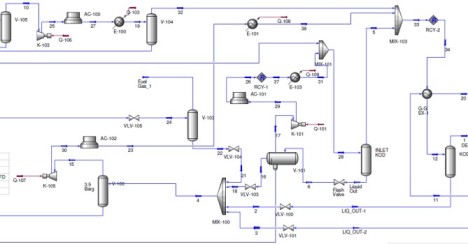
Piping and Instrumentation Diagrams (P&IDs): Detailed diagrams showing equipment, instrumentation, control systems, and interconnections.
Heat and Mass Balance: Accurate calculation of heat and material flows to optimize resource utilization.
Equipment Sizing and Specifications: Initial sizing and datasheets for key equipment like reactors, distillation columns, heat exchangers, and pumps.
Utility and Offsite Requirements: Identification of steam, water, fuel, and other utilities needed for smooth operation.
2. Mechanical and Piping Engineering Deliverables
Preliminary equipment layouts and piping layouts to optimize space utilization.
Material of Construction (MOC) selection based on operating conditions like temperature, pressure, and corrosion.
Piping design criteria, including pipe sizes, insulation, and expansion considerations.
3. Electrical and Instrumentation Deliverables
Single Line Diagrams (SLDs): Electrical distribution and power requirements for the plant.
Control system philosophy and instrumentation specifications.
List of field instruments, analyzers, and control devices.
4. Safety and Risk Assessment
Initial HAZOP and HAZID studies to identify potential hazards in the process design.
Risk mitigation measures and compliance with safety standards.
Firefighting and emergency response layouts.
5. Cost and Schedule Estimation
Development of CAPEX and OPEX estimates for budgeting purposes.
Preliminary project schedules with key milestones for design, procurement, and construction.
6. Environmental Compliance
Assessment of environmental impact and waste management systems.
Recommendations for emissions control, effluent treatment, and energy efficiency.
Role of Basic Engineering in Refinery and Petrochemical Projects
Basic Engineering is particularly crucial in large-scale industrial projects such as refineries, petrochemical complexes, and specialty chemical plants. Here’s how it impacts each sector:
Refinery Projects
Definition of process configurations, including crude distillation, catalytic cracking, and hydro-processing.
Detailed engineering for utility systems like hydrogen production, sulfur recovery, and steam generation.
Optimization of energy integration through heat recovery systems.
Petrochemical Plants
Process design for olefins, aromatics, and polymer production units.
Equipment sizing for high-capacity units like reactors and heat exchangers.
Layout planning for interconnected units to ensure operational efficiency.
Specialty Chemical Plants
Modular plant design to handle smaller production scales with flexibility.
Custom process development for unique chemical reactions and separations.
Emphasis on safety and environmental compliance due to the hazardous nature of specialty chemicals.
The Process of Basic Engineering
The Basic Engineering phase typically follows these structured steps:
1. Data Collection and Validation
Gathering input data from the feasibility study, licensors, and site surveys.
Validation of key parameters such as feedstock composition, product specifications, and utility availability.
2. Process Design
Development of PFDs and P&IDs to establish the overall process flow and equipment interconnections.
Heat and mass balance studies to identify energy-saving opportunities.
3. Preliminary Layouts
Equipment and piping layouts optimized for safety, accessibility, and future expansion.
Definition of plot plans, considering space constraints and environmental regulations.
4. Safety Studies
Conducting HAZID and preliminary HAZOP sessions to identify potential risks.
Recommendations for process and equipment safeguards.
5. Cost and Schedule Analysis
Preparation of cost estimates for equipment, materials, and construction.
Development of a high-level project schedule to align stakeholders.
Key Benefits of Basic Engineering
1. Project Feasibility and Risk Reduction
Basic Engineering minimizes uncertainties by providing detailed technical and financial insights into the project. This reduces the likelihood of design errors, cost overruns, and schedule delays.
2. Stakeholder Alignment
By delivering comprehensive documentation, Basic Engineering ensures alignment between project owners, engineers, and contractors, reducing misunderstandings during later stages.
3. Regulatory Compliance
Basic Engineering ensures that the project adheres to local and international codes, standards, and environmental regulations, avoiding potential legal and operational issues.
4. Cost and Schedule Optimization
Through detailed cost estimation and planning, Basic Engineering enables better budget control and resource allocation, improving project profitability.
Challenges in Basic Engineering
Despite its importance, Basic Engineering can be challenging due to the following factors:
Uncertainty in feedstock or product specifications during early stages.
Managing interface issues between licensors, vendors, and other stakeholders.
Balancing technical rigor with cost and schedule constraints.
Addressing these challenges requires experienced engineers with in-depth knowledge of process design, safety studies, and industry best practices.
Conclusion
Basic Engineering is the foundation upon which successful industrial projects are built. It transforms conceptual ideas into actionable plans, ensuring technical accuracy, cost control, and risk mitigation. For refineries, petrochemical plants, and specialty chemical facilities, investing in a robust Basic Engineering phase not only enhances project feasibility but also sets the stage for efficient execution and long-term operational success.
Whether you’re planning a greenfield project or revamping an existing facility, Basic Engineering is a non-negotiable step in achieving your objectives. Collaborate with experts who bring a wealth of technical knowledge and industry experience to your project, ensuring its success.
Frequently Asked Questions(FAQ)
1. What is Basic Engineering or BDEP in industrial projects?
Basic Engineering, also called the Basic Design and Engineering Package (BDEP), is the foundation of detailed project execution. It defines the process design, key engineering data, equipment sizing, material selection, and overall plant configuration to establish the technical basis for procurement and construction.
2. Why is BDEP important before starting detailed engineering or EPC?
BDEP ensures that all major design and process decisions are finalized before detailed engineering begins. It minimizes rework, optimizes cost, ensures safety compliance, and helps finalize the project CAPEX and technical specifications — enabling a smooth transition into the EPC phase.
3. What deliverables are typically included in a Basic Engineering Package?
A complete BDEP includes:
-
Process Flow Diagrams (PFDs) and P&IDs
-
Heat and Material Balance (HMB)
-
Equipment Data Sheets and Specifications
-
Utility and Offsite Requirements
-
Instrumentation Philosophy
-
Electrical Load Lists
-
Plot Plan and General Arrangement Drawings
-
Preliminary Piping Layouts and Line Lists
-
Project Design Basis and Key Design Criteria
4. How does Basic Engineering differ from FEED (Front End Engineering Design)?
While both aim to define project scope and cost, FEED focuses more on feasibility and budget-level definition, whereas BDEP provides more detailed engineering data and specifications ready for EPC tendering and procurement. In many cases, BDEP is the final engineering package before detailed design begins.
5. How does a strong BDEP reduce project cost and timeline?
A robust Basic Engineering package identifies potential design clashes, process inefficiencies, and cost escalations early in the lifecycle. This proactive clarity saves significant time and money during detailed design, procurement, and construction stages.
6. Who prepares the Basic Engineering or BDEP package?
BDEP is prepared by experienced multidisciplinary engineering teams — including process, mechanical, civil, electrical, instrumentation, and piping engineers — often coordinated under a Project Management Consultant (PMC) or Engineering Consultant such as TakViksh.
7. How is cost estimation and BOQ linked with Basic Engineering?
The BDEP defines all process parameters, material specifications, and equipment details, which form the technical foundation for quantity take-off (BOQ), cost estimation, and tendering. This ensures that cost forecasts are technically validated and accurate.
8. Does Basic Engineering include 3D modeling or only 2D drawings?
Typically, BDEP uses 2D drawings and schematic representations; however, many modern consultants develop 3D conceptual models during BDEP to visualize layout optimization, space utilization, and constructability even before detailed design begins.
9. How long does it take to complete a Basic Engineering package?
Depending on project scale and complexity, BDEP development can take anywhere from 6 to 20 weeks for medium-sized industrial units. Mega-scale or greenfield refinery and petrochemical complexes may take longer due to interlinked systems.
10. What standards and codes are followed in Basic Engineering?
BDEP preparation follows international and national standards such as ASME, API, ASTM, IEC, IS, and relevant client or process licensor guidelines to ensure design integrity, safety, and compliance.
11. How does Basic Engineering ensure safety and reliability of the plant?
By defining design limits, process safety margins, material compatibility, and control philosophy upfront, BDEP helps ensure safe operability and maintainability of the plant through its entire lifecycle.
12. Can the Basic Engineering package be reused for similar projects?
Yes. A well-structured BDEP becomes a valuable reference for future expansions or similar process units, reducing engineering time and improving standardization across multiple plants or locations.
13. What software tools are used for BDEP preparation?
Typical software includes Aspen HYSYS, AutoCAD, SmartPlant P&ID, Caesar II, STAAD Pro, E3D, and ETAP, depending on discipline. Integrated tools ensure accuracy, consistency, and data traceability.
14. How does TakViksh support clients in BDEP development?
TakViksh provides complete Basic Engineering and BDEP development services covering process, mechanical, civil, electrical, instrumentation, and utilities. The approach focuses on cost-effective, safe, and scalable design solutions aligned with client objectives.
15. How can I engage TakViksh for Basic Engineering or BDEP services?
You can reach out through the TakViksh official website or contact the engineering team directly to discuss your project scope. The team will assess process data, establish design criteria, and develop a comprehensive engineering package tailored to your industrial application.