
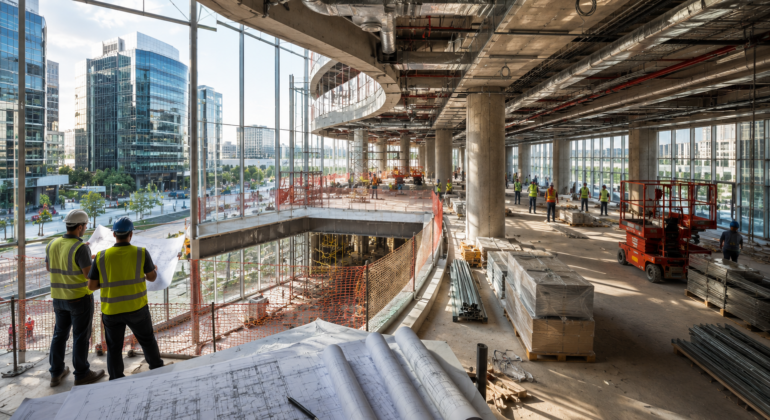
Modern commercial buildings are becoming more complex. Office towers, hotels, hospitals, shopping centres, data centres, and mixed-use projects involve many teams and building systems. Architects, engineers, contractors, suppliers, and facility managers must work together from design to completion.
This is where Building Information Modeling (BIM) is making a major difference. BIM creates a shared digital environment where project information can be coordinated and managed throughout the building lifecycle.
What Is BIM in Commercial Construction?
BIM is more than a 3D model. It connects building design with important project information such as materials, construction planning, quantities, schedules, and asset data.
For commercial construction projects, this connected approach can make communication easier and help teams identify problems before they become expensive site issues.
Instead of working with separate drawings and documents, project teams can work from coordinated digital information.
Better Coordination Between Project Teams
A commercial building may include architectural, structural, electrical, mechanical, plumbing, fire safety, and security systems. A change in one area can affect another.
For example, moving a structural column may affect ductwork or electrical systems. Changing a ceiling height can also affect lighting and fire protection.
With BIM, these systems can be reviewed together in a coordinated digital model. Teams can identify potential conflicts earlier and discuss solutions before construction begins.
This improves BIM coordination and reduces unnecessary design changes during construction.
BIM Helps Reduce Construction Delays
Time is especially important in commercial construction. A delayed office building cannot generate rental income until it is ready for tenants. Similarly, a hotel, shopping centre, or hospital cannot begin full operations until the required work is completed.
BIM helps project teams review construction sequences before work starts. Teams can study installation activities, material deliveries, equipment access, and project dependencies in a digital environment.
This makes it easier to identify potential scheduling problems early and improve construction planning with BIM.
Detect Problems Before Construction
One of the major benefits of BIM is clash detection.
Commercial buildings contain thousands of components. A mechanical duct, structural beam, pipe, or electrical system may need to occupy the same area. If these conflicts are discovered during construction, they can cause delays and additional work.
With BIM, teams can review the digital model and identify many of these conflicts before installation begins. They can then change the design and coordinate the solution in advance.
This proactive approach can help reduce rework and improve construction efficiency.
Better Cost and Procurement Planning
Commercial projects require large quantities of materials and equipment. Poor information can lead to incorrect orders, material shortages, or unnecessary storage.
BIM connects building elements with project information, helping teams understand material quantities as the design develops. This can support BIM quantity takeoff, procurement planning, and cost management.
Better information also helps procurement teams coordinate deliveries with construction activities, which can improve site organisation.
Improving Construction Quality
BIM can also support quality management. Contractors and engineers can review building systems and installation requirements before physical work begins.
Complex areas such as plant rooms, service spaces, structural connections, and building services can be reviewed digitally. This gives teams an opportunity to identify practical problems before they reach the construction site.
As a result, BIM supports better coordination between design intent and actual construction.
BIM Supports the Building After Construction
The value of BIM does not necessarily end when construction is completed. Building information can continue to support facility management and maintenance.
Owners and facility teams can use digital information about equipment, warranties, maintenance schedules, operating manuals, and building assets.
This can make it easier to find information when repairs, upgrades, or renovation work are required years later.
The Future of Commercial Construction
BIM is continuing to develop alongside other digital technologies. Cloud collaboration can help teams work together across different locations, while artificial intelligence can support analysis of project data.
Digital Twin technology can also connect building models with real-time information from operational buildings.
As commercial projects become more complex, BIM provides a connected way to manage design, construction, coordination, and facility management.
Conclusion
BIM is transforming modern commercial building projects by connecting people, information, and building systems in one digital workflow. It can support better coordination, clash detection, construction planning, procurement, quality management, and facility operations.
For commercial construction teams, BIM provides a more connected approach to managing complex projects from the first design idea through the building’s operational life.

Recent Comments