Detailed Engineering, Design, and Consulting Services
Detailed engineering integrates several engineering disciplines into a cohesive framework. Each discipline contributes its expertise, and together they form the blueprint for project execution.
Key disciplines include:
- Process Engineering
- Process Safety Studies
- Plant and Piping Engineering
- Civil & Structural Engineering
- Mechanical & Equipment Design
- Electrical Engineering
- Control & Automation Engineering
- Fire Fighting System Design
Process Engineering
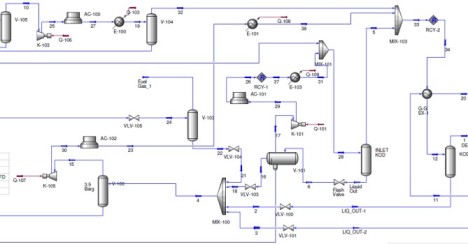
At the core of detailed design lies process engineering, where process flow diagrams are refined into piping and instrumentation diagrams (P&IDs), mass and energy balances, and equipment sizing. Engineers ensure that process efficiency and operability remain intact while laying the foundation for mechanical and electrical integration.
Process Safety Studies
Safety is paramount in modern industrial facilities. Hazard and operability (HAZOP) studies, quantitative risk assessments, and safety integrity level (SIL) evaluations form the backbone of process safety. The objective is to proactively identify and mitigate potential risks, ensuring compliance with global standards while safeguarding personnel, equipment, and the environment.
Plant and Piping Engineering
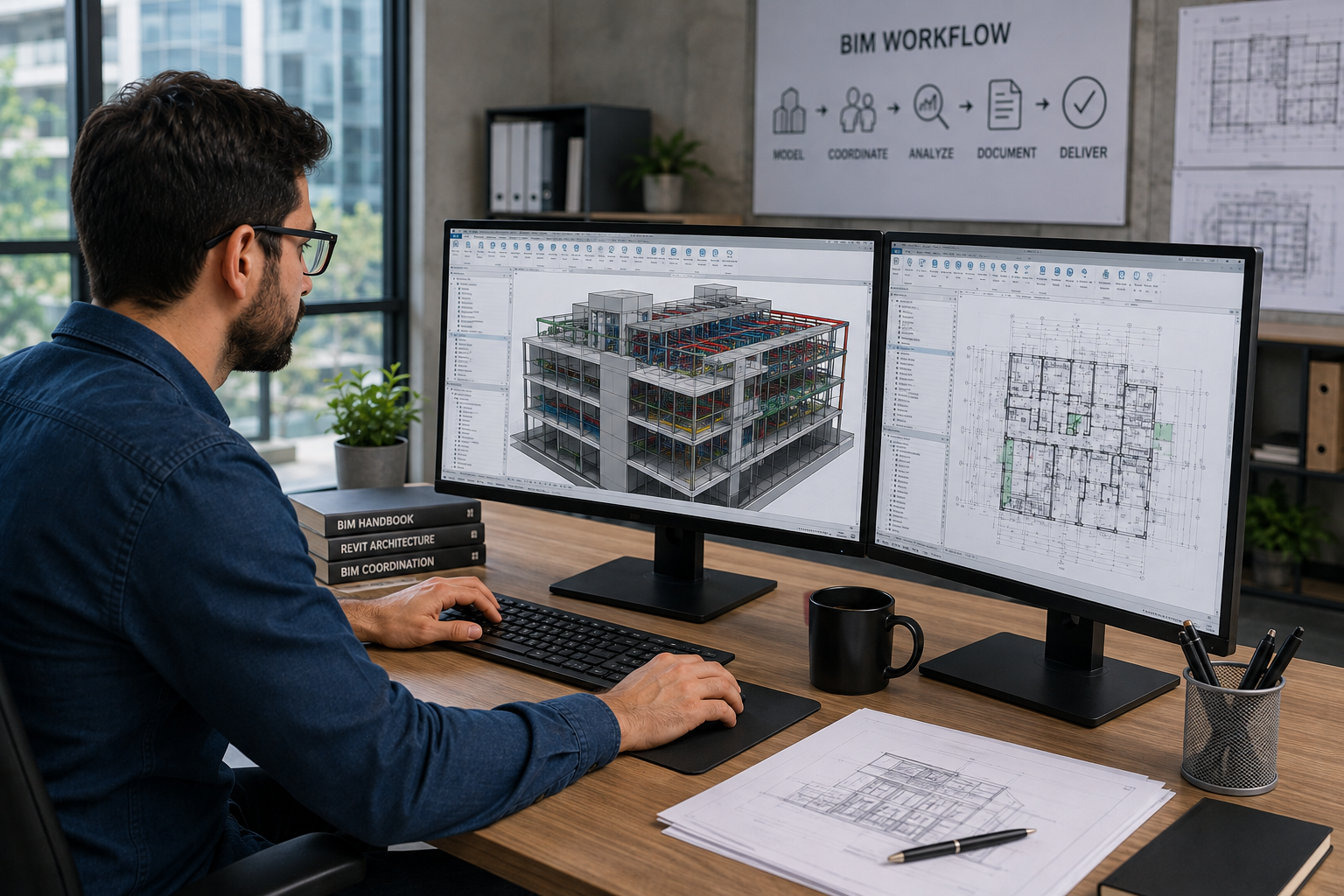
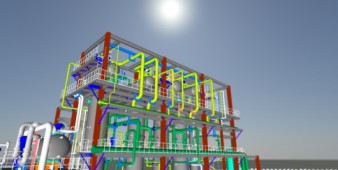
The piping system is often described as the “nervous system” of a plant. Piping engineers design optimal layouts, select materials, and perform stress and flexibility analysis to ensure reliability under operating conditions. This discipline also covers valve selection, pipe support design, and 3D modeling for clash-free layouts.
Civil & Structural Engineering
Every facility stands on a strong foundation, both literally and figuratively. Civil and structural engineers design foundations, buildings, pipe racks, equipment supports, and storage tanks to withstand loads, seismic forces, and environmental conditions. Constructability and cost-effectiveness remain critical drivers of this discipline.
Mechanical & Equipment Design
From pressure vessels and heat exchangers to rotating machinery and storage tanks, mechanical engineers develop designs that conform to ASME, API, and other applicable standards. The focus lies on durability, maintainability, and integration with other systems, ensuring equipment performance throughout the plant lifecycle.
Electrical Engineering
Electrical systems power the plant and ensure operational continuity. Electrical engineers design power distribution networks, substation layouts, cabling systems, earthing, and lighting. The emphasis is on energy efficiency, system reliability, and compliance with safety codes.
Control & Automation Engineering
Modern plants rely on intelligent systems for monitoring and control. Automation engineers develop instrumentation layouts, control logic, distributed control systems (DCS), programmable logic controllers (PLC), and SCADA systems. Smart automation enhances plant safety, process stability, and operational efficiency.
Fire Fighting System Design
Fire safety is an integral part of detailed engineering. Engineers design fire detection, suppression, hydrant systems, sprinklers, and foam systems that comply with NFPA and other international codes. This ensures rapid response capabilities and minimizes damage in case of emergencies.
Safe, Constructible, and Economical Designs
The hallmark of good detailed engineering is balance—designs must be technically sound, safe for operators, easy to construct, and cost-effective to build. This requires careful optimization across disciplines, with each decision evaluated for its impact on lifecycle costs and operational performance.
Why Detailed Engineering Matters
In an industry where time and cost overruns can derail projects, robust detailed engineering reduces uncertainty. It ensures procurement accuracy, minimizes rework, and allows smooth coordination between stakeholders. Companies with strong multi-disciplinary expertise—such as those with proven track records in industrial, chemical, and energy projects—stand out for their ability to deliver reliable and sustainable designs.
Conclusion
Detailed Engineering is the bridge between concept and reality. By integrating process, safety, piping, civil, mechanical, electrical, and automation disciplines, it ensures that industrial plants are built on strong technical, economic, and safety foundations. In today’s competitive landscape, organizations that excel in multi-disciplinary detailed engineering not only deliver projects efficiently but also contribute to safer, more sustainable industrial growth.
Frequently Asked Questions(FAQ)
1. What are Detailed Engineering Services?
Detailed Engineering Services involve the preparation of all technical documents, drawings, and specifications required for the construction, procurement, and commissioning of industrial projects. These services convert basic design concepts into practical, buildable, and executable engineering packages.
2. Why is Detailed Engineering important for industrial and refinery projects?
Detailed engineering ensures accuracy, safety, cost optimization, and schedule control. It minimizes construction risks, eliminates design conflicts, and ensures that the plant or system performs as per design intent. For refinery, petrochemical, and process plants, it forms the backbone of safe and efficient plant execution.
3. What disciplines are covered under Detailed Engineering?
A complete Detailed Engineering package typically includes:
-
Process engineering (PFDs, P&IDs, material balance)
-
Mechanical and piping design
-
Civil and structural engineering
-
Electrical and instrumentation design
-
Control system integration
-
HSE and process safety engineering
4. How does Detailed Engineering differ from Basic Engineering?
Basic Engineering defines the conceptual and preliminary design — focusing on major equipment, process flow, and design basis.
Detailed Engineering, on the other hand, converts this information into construction-level deliverables like fabrication drawings, datasheets, isometrics, and BOQs ready for procurement and site execution.
5. What deliverables are typically included in a Detailed Engineering package?
Typical deliverables include:
-
Equipment layout and GA drawings
-
Piping isometrics and MTOs
-
Electrical SLDs and cable schedules
-
Civil foundation and structural drawings
-
Instrument index and loop diagrams
-
3D modeling and clash analysis reports
-
Safety and HAZOP recommendations
6. How do Detailed Engineering Services help reduce project cost and time?
By ensuring complete design integration across disciplines, detailed engineering eliminates rework, prevents material wastage, and ensures procurement of correctly specified equipment. Early identification of design conflicts helps reduce project delays and cost overruns.
7. What software tools are used for Detailed Engineering?
Reputed engineering firms use advanced tools such as:
-
AutoCAD, SmartPlant, PDMS, and E3D for design modeling
-
CAESAR II, STAAD.Pro, ETAP for analysis
-
Primavera, MS Project for planning and control
-
Aspen HYSYS and PIPE-FLO for process simulations
These ensure precision, consistency, and digital traceability of design data.
8. What is the role of Process Safety Studies in Detailed Engineering?
Process safety is integrated throughout the detailed engineering phase through studies such as:
-
HAZID, HAZOP, SIL, and QRA
-
HAC (Hazardous Area Classification)
-
SIMOPS and RRA
These ensure the facility meets global safety standards and regulatory compliance.
9. Are Detailed Engineering Services relevant for brownfield or plant modification projects?
Yes. Detailed engineering is equally vital for revamp, expansion, and debottlenecking projects. Accurate documentation of as-built conditions and integration of new systems are essential to minimize shutdown durations and operational risks.
10. Does Detailed Engineering include cost estimation and procurement support?
Yes. Along with design deliverables, cost estimation, vendor evaluation, procurement support, and technical bid analysis are part of a complete detailed engineering scope, ensuring the project is both technically and commercially optimized.
11. How do engineering consultants ensure quality and compliance?
All deliverables undergo multi-tier design checks, inter-discipline reviews, and constructability assessments. Compliance with international codes (ASME, API, ASTM, IEC, IS) ensures design reliability and approval by statutory authorities.
12. How can I select the right Detailed Engineering partner?
Choose a partner with:
-
Proven track record in similar projects (refinery, petrochemical, or industrial facilities)
-
Integrated multi-disciplinary team
-
Safety and sustainability expertise
-
Digital design capability (3D modeling, BIM, or EPCM integration)
A strong engineering partner ensures your project is technically sound, cost-effective, and execution-ready.