front-end engineering design (feed) service in India
Frequently Asked Questions(FAQ)
1. What is Front End Engineering and Design (FEED)?
FEED (Front End Engineering and Design) is the intermediate phase between Conceptual Design and Detailed Engineering. It develops the technical definition, scope, cost, and schedule basis of a project, enabling clients to make informed investment and execution decisions before moving into EPC or construction.
2. Why is FEED important for industrial and refinery projects?
FEED establishes the technical and commercial foundation of a project. For complex refinery, petrochemical, or process facilities, FEED ensures design optimization, cost accuracy, regulatory compliance, and risk mitigation, resulting in smoother execution and reduced change orders later.
3. What are the key objectives of a FEED study?
FEED aims to:
-
Define process and utility requirements
-
Finalize equipment sizing and preliminary specifications
-
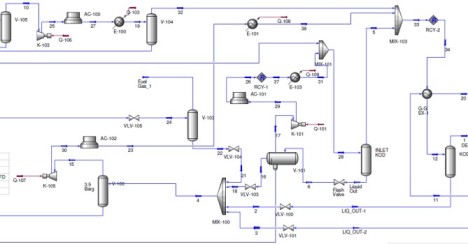
Develop plot plans, PFDs, and P&IDs
-
Prepare cost estimates (+/-10–15% accuracy)
-
Establish execution schedule and contracting strategy
-
Identify risks and define mitigation plans
4. How does FEED differ from Basic and Detailed Engineering?
-
Basic Engineering provides conceptual layouts and design intent.
-
FEED refines those concepts into a well-defined technical and cost package.
-
Detailed Engineering then converts FEED outputs into construction-ready deliverables.
In essence, FEED acts as the bridge between concept and execution.
5. What deliverables are typically produced during a FEED project?
Typical FEED deliverables include:
-
Process Flow Diagrams (PFDs) and P&IDs
-
Equipment lists and data sheets
-
Utility balance and process simulations
-
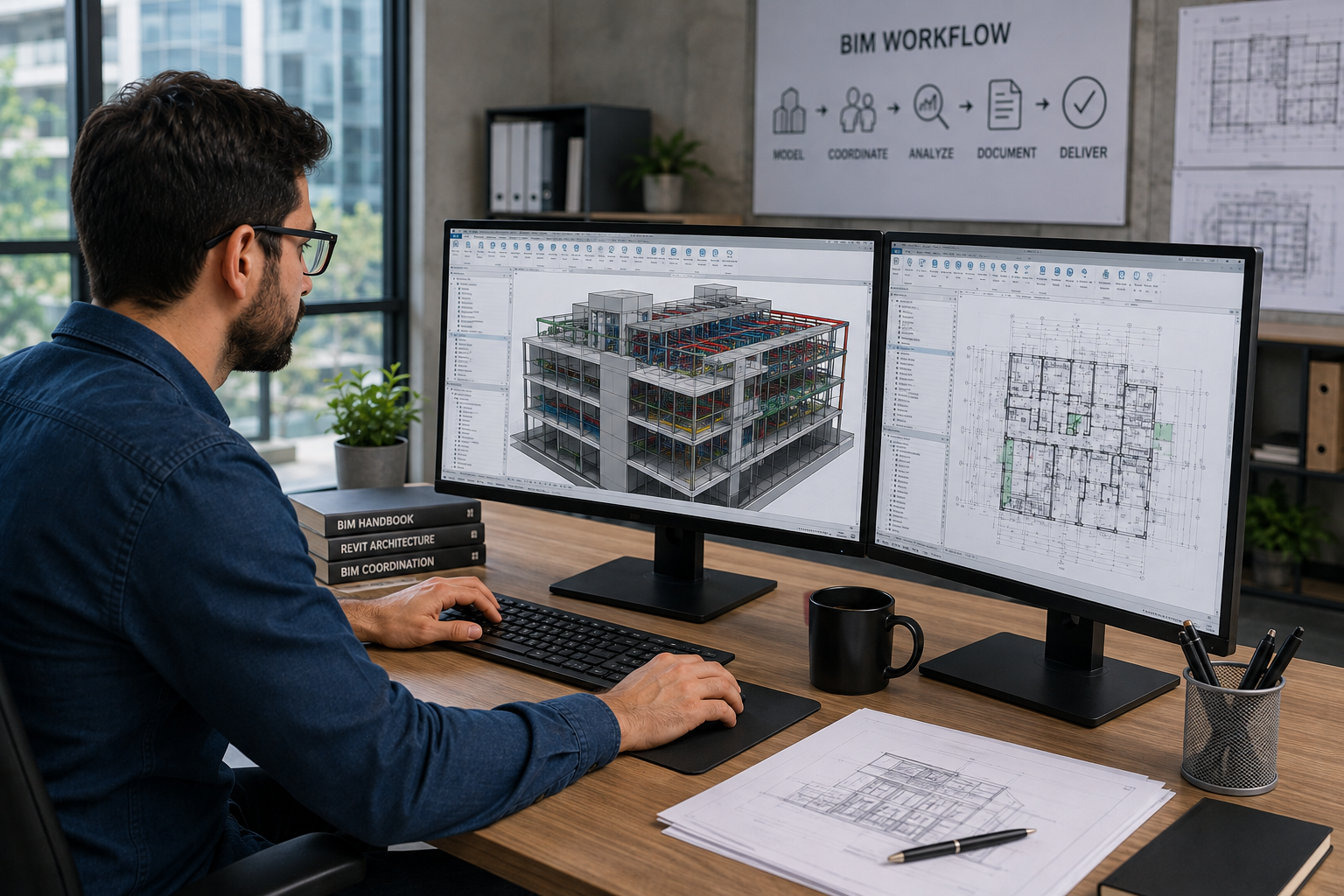
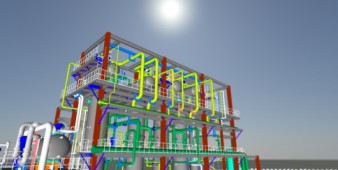
Preliminary layout and 3D model
-
Project execution plan (PEP)
-
Material take-off (MTO) and cost estimate
-
Schedule and risk register
6. How does a good FEED help in reducing project costs?
A well-executed FEED minimizes design changes, rework, and procurement delays. By locking in design parameters and scope early, it reduces uncertainties and avoids expensive modifications during detailed engineering or construction.
7. What software tools are used in FEED engineering?
Industry leaders use tools such as:
-
Aspen HYSYS, PIPE-FLO, and PRO/II for process simulations
-
AutoCAD, SmartPlant, PDMS, and E3D for layouts
-
Primavera or MS Project for scheduling
-
STAAD.Pro, ETAP, and CAESAR II for preliminary analysis
These ensure data consistency, technical accuracy, and digital continuity to the next project phase.
8. How long does a typical FEED phase take?
The duration depends on project size and complexity. For most industrial plants, FEED typically spans 3 to 9 months, covering process definition, discipline coordination, and cost evaluation to achieve execution-level readiness.
9. How does FEED integrate with HSE and process safety studies?
FEED incorporates early HSE and process safety evaluations, such as:
-
HAZID and preliminary HAZOP
-
SIL assessments
-
Hazardous Area Classification (HAC)
Embedding safety early ensures the design complies with national and international standards and reduces later rework.
10. What are the advantages of engaging the same consultant for FEED and Detailed Engineering?
Continuity between FEED and Detailed Engineering ensures:
-
Consistent design philosophy
-
Efficient data transfer and revision control
-
Reduced learning curve for the team
-
Faster transition to EPC phase
-
Lower engineering rework and improved schedule certainty
11. How accurate is the cost estimate prepared during FEED?
A Class 3 cost estimate (as per AACE classification) is typically prepared during FEED, providing ±10–15% accuracy. This forms the benchmark for project budgeting, financing, and contractor bid evaluation.
12. How does FEED support EPC tendering and contracting?
FEED defines the technical scope, material specifications, and performance criteria, forming the basis for EPC tender documents. This allows apples-to-apples comparison among bidders and ensures transparency in contractor selection.
13. Is FEED mandatory for brownfield or plant expansion projects?
Yes. For brownfield or revamp projects, FEED is critical to assess existing infrastructure, tie-ins, space availability, and operational constraints. It helps develop constructable and safe expansion strategies with minimal plant downtime.
14. How is value engineering integrated into FEED?
During FEED, the team conducts value engineering (VE) workshops to identify cost-effective design options, material alternatives, and modularization opportunities, optimizing CAPEX while maintaining functionality and safety.
15. How to select the right FEED consultant?
A competent FEED consultant should offer:
-
Proven multi-disciplinary engineering expertise
-
Strong process design background
-
Experience in similar industries (refinery, petrochemical, chemical, etc.)
-
Integrated safety and cost engineering approach
-
Digital toolchain compatibility for smooth EPC transition
Such a consultant ensures that the FEED package is technically robust, commercially sound, and execution-ready.